Tactical Strategy Commander
Single Player Strategy Tactical Turn-Based Resource Management Family Friendly
Tactical Strategy Commander
105
Developer: Haven Link Games
Published: 2025-08-31
Updated: 2026-11-22

Reviews

Tactical Strategy Commander leans on planning rather than presentation. Its core loop asks you to hire units within a fixed budget, position them on the map, and outmaneuver enemy armies that grow tougher over time. The simple mouse and WASD controls keep it approachable, while the quality-versus-quantity decision and terrain use give experienced players something to chew on. The main limitation is scope: it is a single-player experience with no stated multiplayer, so replay value depends on how much you enjoy refining your own tactics.

Description

Building an Army on a Budget

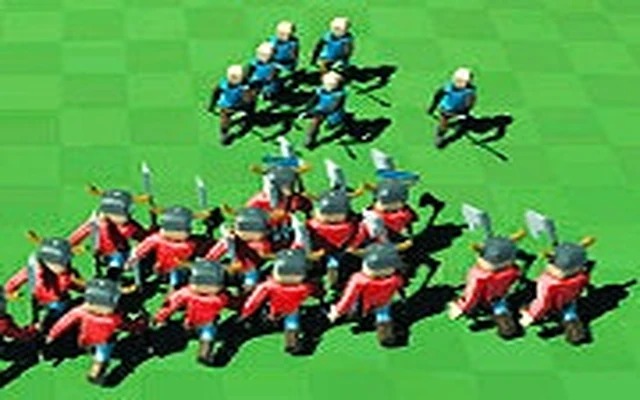
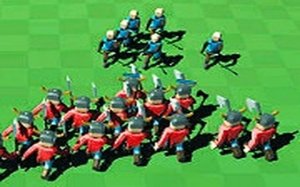
Every match in Tactical Strategy Commander starts with a fixed budget. Before placing a single soldier, you decide how to split that budget between unit quality and unit quantity. A smaller group of stronger units plays differently from a larger group of cheaper ones, and the game expects you to weigh that trade-off each time. Because the enemy army scales in difficulty as you progress, a spending plan that wins one map may leave you short on troops for the next.

Placement and Map Control

Once your force is hired, the battlefield becomes a positioning puzzle. You navigate the map with the mouse or the W, A, S, D keys, then left-click to place soldiers where they gain a tactical advantage. Terrain matters: high ground, chokepoints, and open flanks change how much value each unit delivers. The goal is not to overwhelm the enemy but to outmaneuver them, which means reading the map before committing your placements.

Reading Enemy Patterns

Enemy armies grow more challenging as you advance, and each level introduces new obstacles. Studying how the enemy deploys and moves lets you adapt your own formation instead of repeating the same layout. This is where the game's strategic depth sits: patience and forward planning matter more than fast clicking. Players who think several moves ahead tend to handle later levels more comfortably than those who react on the spot.

Accessibility and Audience

Controls are intentionally simple, and the game avoids graphic content, focusing on mental challenge rather than spectacle. That combination makes it approachable for beginners while still offering enough tactical depth for experienced strategy players. If you enjoy resource management, unit placement, and methodical problem-solving in a single-player format, this fits that profile well.
Editorial Notes

Compatibility

✅ This game supports:
- Desktop browsers (Chrome, Edge, Safari)
- Mobile browsers (Chrome on Android, Safari on iOS)
❌ Does NOT support: - Internet Explorer - Very old browser versions
👉 Try refreshing or updating your browser

Faq

Is Tactical Strategy Commander a multiplayer game?
No. The game is built entirely around a single-player experience, with tags listing both 1 Player and Single Player. There is no indication of online matches, co-op, or competitive modes. All of your decisions are made against computer-controlled enemy armies, so you can play at your own pace without coordinating with other people.
What do I actually control during a match?
You control two main things: how you spend your starting budget on soldiers, and where you place those soldiers on the map. You move the view with the mouse or W, A, S, D keys and left-click to position units. The outcome depends on those placement and spending decisions rather than on reflexes or action controls.
Does the game get harder as I progress?
Yes. The description states that enemy armies become more challenging as you advance, and each level introduces new obstacles. That means the same tactics that work early on may need adjusting later. The game encourages you to improve your approach over time rather than relying on one fixed strategy for every map.
Is Tactical Strategy Commander suitable for children?
The game is described as non-violent and family-friendly, focusing on strategic thinking rather than graphic content. Combat is abstracted into placement and maneuvering rather than shown in detail. Because of that, it is presented as suitable for players of all ages, though younger players may still need help with budgeting and long-term planning.
What is the biggest mistake new players make?
Spending the entire budget on one type of unit is a common pitfall. The game rewards balancing quality and quantity, and it also rewards saving enough resources to handle later levels. Ignoring terrain and placing soldiers without a plan tends to cost more than any single hiring choice, so map reading matters from the first turn.
Do I need fast reflexes or prior strategy experience?
Neither is required. The controls are simple and the game is designed to be accessible for beginners while still offering depth for experienced players. Success comes from planning, resource management, and studying enemy patterns, not from quick reactions. That makes it a reasonable entry point if you are new to tactical strategy games.