Prehistoric Robot Builder Challenge
Reviews
Prehistoric Robot Builder Challenge stands out for its thoughtful progression from simple construction to basic tactical play. The assembly puzzles are satisfying without being frustrating, and the test zone lets kids experiment freely. The turn-based matches introduce strategy in a gentle way, making this a solid choice for parents seeking educational screen time that feels like play.
Description
Assembly Fundamentals
Players begin by selecting a dinosaur model to construct. Each model is broken into several distinct pieces that must be placed in the correct order. A simple drag-and-drop interface allows children to pick up each part and move it to the matching outline on the build screen. The game provides subtle visual hints, such as color cues and shape outlines, to guide younger players without giving away the solution. This core loop of selecting, positioning, and confirming each piece builds spatial awareness and attention to detail.
Progressive Difficulty Tiers
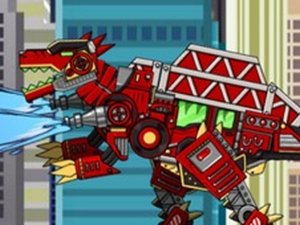
The experience is structured around two main difficulty levels. The introductory tier features a simpler vehicle form, such as a fire truck, which uses fewer and larger pieces. This allows new players to learn the interface and understand the assembly logic. The advanced tier presents a full mechanical dinosaur with more intricate parts, requiring greater precision and patience. Moving between these tiers gives children a clear sense of accomplishment as their skills improve.
Practice and Preparation Area
Once a model is complete, players can enter a dedicated test zone. Here they can try out various functions assigned to their creation, such as movement abilities or defensive tools. This area is designed for free experimentation without time pressure or opponents. Children can repeat actions, observe outcomes, and learn how each tool works. This sandbox approach encourages curiosity and helps build confidence before moving to competitive scenarios.
Turn-Based Match System
After mastering the test zone, players can enter a friendly match against an AI-controlled opponent. Each turn, the player selects an action from their available tools and abilities. The opponent responds based on its own programmed logic. Matches are short and focus on strategic decision-making rather than speed. Victory comes from using tools at the right moment, such as deploying a shield before an attack or using a jump to avoid damage. This structure teaches basic turn-based strategy in a low-pressure environment.
Educational Value and Skill Development
The game naturally reinforces several cognitive skills. Shape recognition is practiced every time a child matches a part to its outline. Sequential thinking is developed through the step-by-step assembly process. Strategic planning emerges during matches as children learn to anticipate opponent actions. Because all interactions are constructive and non-violent, parents can feel confident allowing unsupervised play. The combination of building and tactical thinking makes this a well-rounded educational tool for young learners.