Cosmic Defender Tentacle Showdown
Reviews
Cosmic Defender Tentacle Showdown delivers a tight dodge-and-tap loop that rewards quick reactions and pattern recognition. The fan-made superhero aesthetic will appeal to followers of the animated series, while the lack of save progression keeps sessions casual and replayable. The difficulty curve is well-paced for newcomers, though veteran players may find the early rounds slow. Overall, it is a solid choice for brief, skill-based play on handheld or tablet.
Description
Dodging and Counterattacking
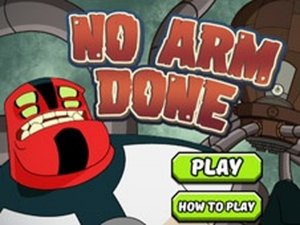
In Cosmic Defender Tentacle Showdown, you control a superhero positioned at the center of a simple arena. A mechanical octopus attacks with its limbs, and visual markers on the ground indicate where each strike will land. When a marker changes color, an attack is imminent. A quick left or right swipe moves your character out of harm's way. Successfully dodging creates a brief opening: targeting icons appear on the octopus's limbs. Tapping these icons rapidly deals damage. The round ends when all attacking limbs are cleared. This loop of reading cues, dodging, and counterattacking defines every encounter.
Escalating Challenge
The game increases difficulty across rounds. Early rounds give you time to learn the timing of dodges and the rhythm of counterattacks. As you progress, the octopus attacks more frequently and from multiple directions at once. Visual cues appear with less lead time, forcing faster decisions. This steady ramp keeps the experience engaging without becoming overwhelming. Players who stay focused and adapt their timing will see improvement with each attempt.
Visual Style and Feedback
The visual presentation draws from a well-known animated superhero universe. Character designs and color schemes reflect the source material, creating an immediate connection for fans. The mechanical octopus has distinct limb animations that make its attack patterns readable. The arena background stays simple, keeping attention on the action. Sound effects accompany dodges and successful strikes, reinforcing the gameplay loop with clear audio feedback.
Controls and Session Design
Controls are built around simple tap and swipe gestures. Moving requires only a left or right swipe. Counterattacks use repeated taps on visible targets. There are no complex button combinations or menu navigation during gameplay. The interface shows only essential information, such as round number and health status. Each session consists of multiple rounds that can be completed in a few minutes, making it suitable for short breaks. After finishing, you can restart to try for a higher round count or faster completion time. The game does not include a save system or persistent progression, so each session is a fresh challenge.







Editorial Notes