Sketch & Steer Cargo Challenge
Reviews
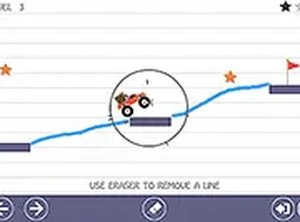
Sketch & Steer Cargo Challenge turns path-drawing into a satisfying puzzle. The core loop is simple: sketch a stable road, watch the truck roll, and collect stars. What makes it work is how each level introduces a new twist—sharp turns, uneven ground, or tight spaces—that forces you to rethink your approach. The lack of a timer reduces pressure, making it ideal for family play. Controls are responsive across devices, and the browser-based setup means zero friction. It is a well-paced experience that respects the player's time.
Description
Drawing Meets Delivery
This game combines simple drawing mechanics with a delivery objective. Instead of controlling the truck directly, you sketch a road on the screen. The vehicle then follows your line automatically. The challenge lies in making that line stable enough to prevent the load from tipping off. Each level presents a new layout where you must connect a starting point to a finish marker while avoiding hazards.
Obstacle Variety & Terrain
As you progress, the environment becomes more complex. You might encounter uneven ground, narrow passages, or moving elements that force you to adjust your drawing strategy. Some sections require a gentle slope, while others demand a sharp turn. The game gradually introduces these variations to keep the problem-solving fresh without overwhelming new players.
Scoring Through Star Collection
Scattered along each route are small stars. Collecting them adds to your final score for the level. While reaching the end marker is the primary goal, gathering all stars often requires a more thoughtful path. This encourages players to balance safety with efficiency, adding a layer of replayability for those aiming for perfect runs.
Accessible Across Devices
No downloads or installations are needed. The game runs directly in a web browser on computers, tablets, and phones. Controls are simple: tap or click to draw, then watch the truck move. This makes it easy for younger players to pick up while still offering enough depth to engage older ones. The clean interface keeps the focus on the puzzle at hand.
Progressive Difficulty Curve
Early levels act as a tutorial, teaching the basic cause-and-effect of drawing paths. Later stages introduce tighter spaces and more delicate cargo. The difficulty increases gradually, so players build confidence before facing tougher challenges. This structure suits both casual sessions and longer play periods.